Multimodal AI for Biology and Target Discovery
We develop statistical machine learning, deep learning, and multimodal foundation models to decode disease biology across molecular, cellular, tissue, and population scales. Our methods integrate single-cell, spatial, multi-omics, imaging, clinical, genetic, and microbiome data to identify disease mechanisms, cell states, biomarkers, therapeutic targets, patient subtypes, and host–microbiome interactions. This work provides the biological evidence needed to prioritize targets, define therapeutic hypotheses, and guide downstream drug design and precision medicine.
.
Representative work:
• A Copula-infused Graph Neural Network for Cell Type Classification in Single Cell RNA Sequencing Data. Computational and Structural Biotechnology Journal, 2026
• ST-CellSeg: Cell Segmentation for Imaging-Based Spatial Transcriptomics Using Multiscale Manifold Learning. PLOS Computational Biology, 2024
• Integrative Analysis of Taste Genetics and the Dental Plaque Microbiome in Early Childhood Caries. Cell Reports, 2025

Agentic and Generative AI for Therapeutic Design
We build collaborative AI agents and generative models that reason across molecular structures, protein targets, biological networks, target evidence, and experimental constraints to propose, evaluate, and iteratively refine therapeutic candidates. Our work combines large chemical language models, graph neural networks, diffusion and flow models, reinforcement learning, multimodal foundation models, uncertainty quantification, and closed-loop optimization. These systems jointly consider potency, selectivity, synthesizability, ADMET, safety, novelty, and other therapeutic objectives for the design of small molecules, antibiotics, antimicrobial peptides, proteins, and drug combinations.
Representative work:
• MAC-AMP: A Closed-Loop Multi-Agent Collaboration System for Multi-Objective Antimicrobial Peptide Design. ICLR 2026
• Uncertainty-Aware Multi-Objective Reinforcement Learning-Guided Diffusion Models for 3D De Novo Molecular Design. NeurIPS 2025
• GraphBAN: An Inductive Graph-Based Approach for Enhanced Prediction of Compound-Protein Interactions. Nature Communications, 2025

Agentic Multimodal AI for Clinical Translation
We develop agentic multimodal AI systems that integrate medical images, radiomics, clinical records, phenotypes, biomarkers, and molecular data to support diagnosis, prognosis, risk stratification, treatment-response prediction, and therapeutic planning. Our work emphasizes clinically meaningful evaluation, radiogenomics, continual learning, phenotype-grounded reasoning, synthetic-data generation for data-scarce diseases, and human-in-the-loop decision support. By connecting computational predictions with clinically interpretable evidence, this research helps translate biological and therapeutic discoveries into testable and clinically useful applications.
Representative work:
• RADx: Hand X-Ray Rheumatoid Arthritis Severity Assessment Tool. CVPR 2026 Demo Track
• RDFace: A Benchmark Dataset for Rare Disease Facial Image Analysis under Extreme Data Scarcity and Phenotype-Aware Synthetic Generation. CVPR 2026 Highlight
• Conditional Probabilistic Diffusion Model Driven Synthetic Radiogenomic Applications in Breast Cancer. PLOS Computational Biology, 2024
Trustworthy and Data-Efficient Biomedical AI
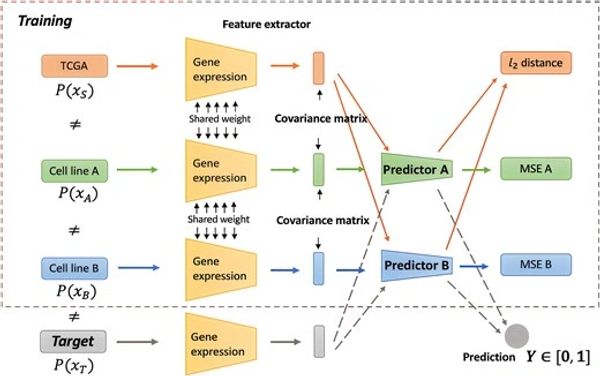
We develop foundational AI methods that remain reliable, interpretable, privacy-aware, and scientifically useful when biomedical data are scarce, noisy, biased, heterogeneous, or distributed across cohorts and institutions. This cross-cutting research includes uncertainty quantification, out-of-distribution learning, calibration, batch-effect mitigation, interpretable modeling, privacy-preserving learning, synthetic-data generation, and rigorous evaluation of generative and agentic systems. These methods provide the technical foundation for trustworthy biological discovery, therapeutic design, and clinical translation.
.
Representative work:
• Out-of-Distribution Learning in Multiomics: Advancements and Challenges. Briefings in Bioinformatics, 2025
• Enhanced Interpretable Neural Network Approach for Unified Batch Effect Mitigation and Disease Classification Using Cross-Cohort Microbiome Profiles. Journal of Computational Biology, 2025
• Synthetic Data Alone is Enough? Rethinking Data Scarcity in Pediatric Rare Disease Recognition. CVPR 2026 Workshop on CV4CHL

Collaborative and Translational Team Science
Dr. Hu has extensive experience building multidisciplinary collaborations that connect computational methodology, biological discovery, experimental research, and clinical investigation. His research program relies on close collaboration with basic scientists, medicinal chemists, experimental researchers, clinicians, and data scientists to ensure that AI-generated hypotheses and therapeutic candidates are biologically grounded, experimentally testable, and clinically relevant.
In the past 12 years, as a health data science lead, Dr. Hu has helped other principal investigators successfully apply for seven CIHR project and team grants in human/statistical genetics, microbiome, methylation, proteomics, chemogenetics and single cell analysis.
Our Funding Partners